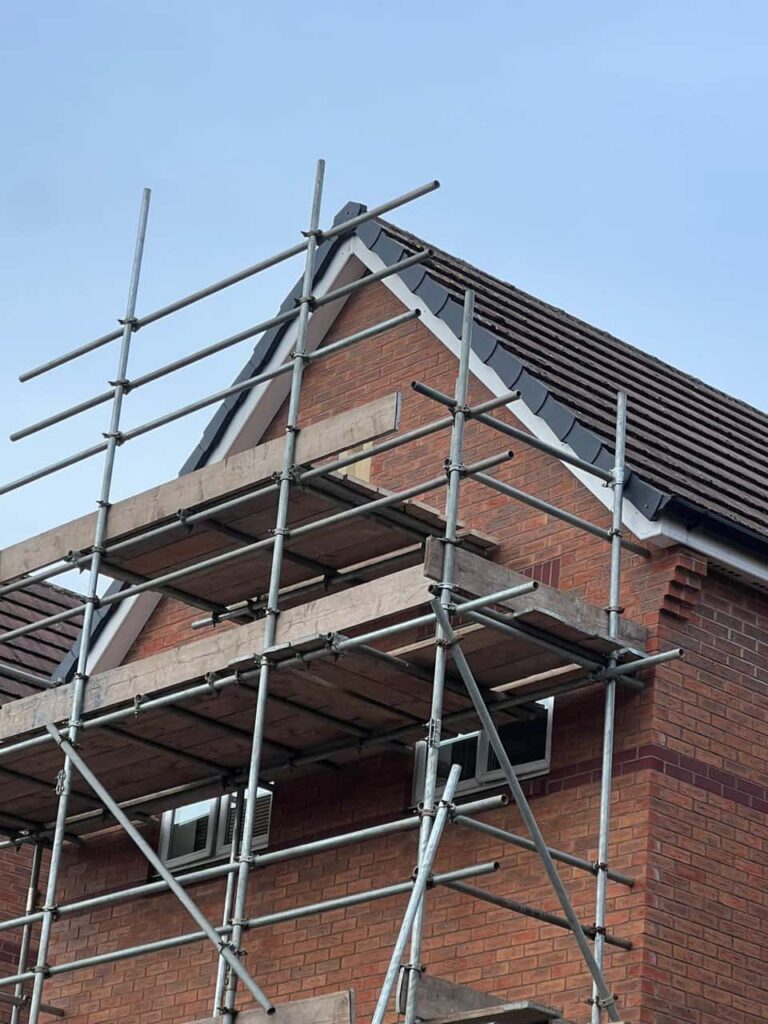
A slipped roof tile can look like a small and isolated defect, particularly when the rest of the roof appears intact. However, tiles form an overlapping system designed to guide rainwater safely down the roof. When one tile moves out of position, that protective arrangement can be interrupted, potentially exposing areas that would normally remain covered.
For homeowners in Tipton, West Midlands, a slipped tile is therefore worth addressing even when there are no obvious signs of an internal leak. During windy, wet conditions, rain does not always travel vertically down the roof. Wind can force moisture beneath displaced or poorly seated coverings, making relatively small openings more significant than they initially appear.
How Can a Slipped Roof Tile Allow Wind-Driven Rain to Enter?
Correctly positioned tiles overlap one another so that rainfall is directed towards the roof edge. When a tile slips, the overlap can be reduced or lost, creating a gap through which wind-driven rain may reach the materials beneath.
The severity depends on how far the tile has moved, its position on the roof and the condition of the surrounding roofing components. The important point is that repositioning the tile should not be considered in isolation; the reason it slipped and the condition beneath it should also be checked.
Why Wind-Driven Rain Behaves Differently
Under calm conditions, gravity encourages rainfall to travel down the roof covering. Strong winds can change the direction in which water moves.
Rain can be driven sideways and upwards beneath vulnerable edges, particularly where a tile is no longer sitting correctly. A gap that might appear reasonably protected during light rainfall can therefore become more exposed during unsettled weather.
This is one reason a slipped tile may not cause noticeable problems every time it rains.
Roof Tiles Depend on Correct Overlap
Individual tiles do not work independently. Their weather resistance depends partly on how they overlap with the coverings above, below and alongside them.
When one tile moves, the amount of protected surface beneath it changes. Parts of neighbouring tiles or the roof beneath may become exposed to weather conditions they were not intended to receive directly.
Restoring the correct tile position helps reinstate this overlapping arrangement rather than merely improving the appearance of the roof.
A Small Gap Can Still Matter
A slipped tile does not need to leave a large opening before it deserves attention.
Wind-driven rain can enter relatively restricted gaps, particularly when the weather repeatedly approaches the affected roof slope from an exposed direction. Once moisture reaches beneath the primary covering, its route becomes less predictable.
The size of the visible opening should therefore not be the only factor used to judge whether a repair is necessary.
Water May Reach the Underlay
The underlay beneath tiles provides an important secondary level of protection, but it should not be treated as a substitute for a correctly positioned roof covering.
If wind-driven rain passes beneath a slipped tile, the underlay may help manage some of that moisture. Its effectiveness, however, depends on its condition, installation and the details surrounding the affected area.
Where the underlay is older, damaged or deteriorated, moisture may find a route further into the roof construction.
Why an Internal Leak May Not Appear Immediately
One common misconception is that a slipped tile is harmless if there is no damp patch inside the property.
Water entering beneath the covering does not necessarily travel directly downwards. It may move along underlay, battens or other roof components before eventually reaching a point where it becomes visible internally.
This means there can be a delay between the original roofing defect and obvious signs inside the property.
The Position of the Slipped Tile Can Influence the Risk
Some areas of a roof involve more complex water movement than others.
Tiles close to roof junctions, valleys, verges or other details should be assessed carefully because the surrounding components also play a role in managing rainfall. A displaced tile near one of these areas may affect more than a straightforward section of roof covering.
The repair should therefore consider how the tile interacts with the complete surrounding detail.
Why Did the Tile Slip?
Finding the reason for the movement is an important part of achieving a dependable repair.
A tile may move because an individual fixing has failed, but the problem can also involve deterioration of supporting battens or surrounding materials. Strong winds may expose an existing weakness rather than being the sole cause of the displacement.
If the underlying reason is not corrected, simply moving the tile back into position may not prevent it or a neighbouring tile from slipping again.
Check Neighbouring Tiles at the Same Time
A visibly displaced tile can sometimes be the first indication that other coverings within the same section have become less secure.
Neighbouring tiles may still appear correctly positioned while showing early signs of movement or reduced support. Checking the surrounding area provides a better understanding of whether the defect is genuinely isolated.
If everything else remains sound, the repair may stay highly localised. If additional weaknesses are found, they can be addressed before further tiles move.
Battens and Fixings Can Be Part of the Problem
Tiles rely on suitable support and fixing beneath the visible roof surface.
If a fixing has deteriorated or a batten is no longer providing dependable support, the tile may not remain secure even after being repositioned. This is why the underlying components should be considered when investigating repeated or unexplained tile movement.
Correcting the cause provides a stronger repair than simply treating the visible symptom.
Repeated Slipped Tiles Deserve Further Investigation
One isolated slipped tile does not automatically suggest a widespread roofing problem. Repeated movement within the same section is more significant.
If tiles continue slipping after previous attention, there may be a weakness affecting the supporting materials or fixings across a broader area. Continuing to replace or reposition individual tiles without investigating this pattern can leave the underlying issue unresolved.
A wider assessment can establish whether additional repair work is appropriate.
Wind Can Make an Existing Weakness More Obvious
Severe weather often reveals roofing problems that were already developing.
A tile with weakened support may remain in position during ordinary conditions but move once subjected to stronger wind forces. The weather event may therefore be what exposes the defect rather than what created the entire problem.
Understanding this distinction is useful because it directs attention towards the security of the affected roofing section.
What Happens If a Slipped Tile Is Left Unrepaired?
Leaving the tile displaced can keep the underlying area exposed to repeated weather conditions.
Further wind may move the tile again, while rainfall can continue reaching beneath the normal overlap. Depending on the circumstances, neighbouring materials may also become more vulnerable.
Addressing the defect promptly can help keep the repair confined to the original problem rather than allowing moisture or movement to affect a larger section.
Does One Slipped Tile Mean the Roof Needs Major Work?
No. A single slipped tile does not automatically mean there is a serious problem across the entire roof.
Where the tile, surrounding covering and supporting materials are otherwise sound, a focused repair may be entirely appropriate. More extensive work only becomes relevant when inspection identifies broader deterioration or repeated movement.
The scope of the repair should reflect the actual roof condition rather than the appearance of one defect alone.
Why Professional Inspection Is Worthwhile
A slipped tile is easy to identify from ground level, but the reason it moved can be considerably less obvious.
Professional assessment can examine the affected tile alongside its fixings, supporting components and neighbouring roof covering. This helps determine whether the problem is isolated and whether wind-driven rain has had an opportunity to affect the area beneath.
At Tipton Roofing Repairs, we focus on identifying the cause of roofing defects before determining the appropriate repair. This helps ensure that work addresses the problem rather than simply concealing its most visible sign.
Early Repair Can Protect the Surrounding Roof
One of the main benefits of dealing with a slipped tile promptly is protecting roofing materials that remain in good condition.
Restoring the correct overlap reduces the route available for wind-driven rain, while checking the surrounding section can identify any related weaknesses before they develop further.
Where the problem is genuinely localised, early intervention can help keep it that way.
Conclusion
Yes, a slipped tile can create a path for wind-driven rain. By disrupting the normal overlap of the roof covering, the displaced tile can expose underlying materials and allow moisture to travel beneath an area that would normally be protected.
This does not mean that every slipped tile indicates extensive roof deterioration. In many cases, the problem can be repaired locally. The important consideration is establishing why the tile moved, checking the surrounding materials and restoring the roof covering correctly.
If you have noticed a slipped or displaced roof tile at your property in Tipton, West Midlands, contact Tipton Roofing Repairs. We can assess the affected section, identify the cause of the movement and recommend appropriate repair work to restore dependable protection to your roof.
Call us on: 0121 312 1395
Click here to find out more about Tipton Roofing Repairs
Click here to complete our contact form and see how we can help with your roofing needs.